Showing posts with label Barrier Reef. Show all posts

Tuesday, February 8, 2011

Tiny Belize: A Huge Country for Divers

fishy


If you know any avid divers who have been to Belize, do not ask them about it unless you have a few hours…you will not be able to shut them up.

Belize is in fact a tiny country, but not if you include the underwater wonderland that is adjacent to it. Then, at least in dive terms, it’s one of the largest countries in the world! Belize has everything you want in a tropical escape, but when it comes to the diving and the saltwater fly fishing, it is among the best in the world.

Though it’s probably smaller in total square miles of real estate than some counties in Texas, Belize offers more dive opportunities than you could possibly experience in a year.

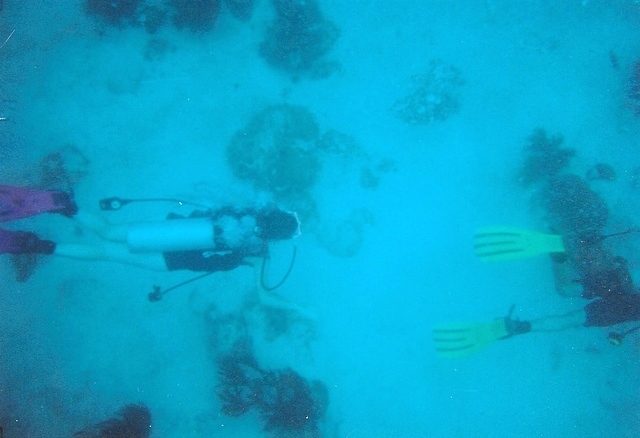
With a bewildering array of big walls, barrier reef, open water atolls and islands, and plenty of sharks of all types, the fact is, diving just may be Belize’s biggest growth industry besides real estate. From coral gardens and stunning parrot fish to giant whale sharks, it’s all here, even for two-tank veteran divers who seek longer outings.

Unlike some Caribbean countries and most of Central America, you can dive year-round in Belize, right through the rainy season.

Tiny Belize: A Huge Country for Divers

Wednesday, February 2, 2011

Photo of the Week - The Lionfish

The invasion of predatory lionfish in the Caribbean region poses a major threat to the coral reef ecosystems. 


These beautiful maroon striped fish with venomous spikes are rapidly multiplying in the Caribbean's warm waters and are swallowing native species, stinging divers and wreaking havoc on an ecologically delicate region.

Belize has started "The Belize Lionfish Project" which conducts multi-activity programs which include monthly lionfish tournaments and outreach programs aimed at educating stakeholders on the invasive lionfish.  The goal of the project is to ensure protection of the Belize Barrier Reef Reserve System World Heritage Site.

Sunday, January 2, 2011

Swimming with the Sharks and Stingrays - Hol Chan Reserve and Stingray Alley

The Shark Bait

Nurse Sharks


While in Belize we took a glass-bottom boat excursion to Hol Chan Reserve and Sting Ray Alley for snorkeling.  Hol Chan (which means "little channel" in Mayan) is a national park and is considered part of the barrier reef and is located at the southern tip of Ambergris Caye.  Hol Chan also has a large sinkhole considered a smaller version to the famous Blue Hole located at Lighthouse Reef. 


Bill Feeding the Sharks


Our Captain


Dive and Snorkel Boats


Our first stop was Stingray Alley where you can swim and snorkel with nurse sharks and large stingrays.  Bill got to feed the sharks, they were immediately surrounding the boat.


Our Tickets


The next stop was Hol Chan, which was so amazing and only cost $10.00US per person.  The coral is beautiful with lots of different shapes, colors and sizes.  The water is pretty shallow until you get to an area which drops off dramatically...you suddenly feel very small in this great big sea of water.


That is my hand with the orange band on..so that is proof that I really did touch the nurse sharks and the sting rays.  The sharks felt really kind of rough and hard..while the stingrays felt very soft and velvety.  I am not sure I liked the way the sting rays felt. 


Moray Eel

One of the guides was actually bitten by an eel, so beware.


Stingray

You can also check out the Hol Chan video we filmed at the bottom of our blog.
 

Wednesday, December 29, 2010

Photo of the Day - Conch Shells


Conch Shells

Conchs need a lot of oxygen in the water to be able to thrive, so that is why they are mostly found near the breaking surf of the barrier reef.  They also like warm clear water and a sandy bottom which makes living in the Caribbean waters of Belize ideal for conchs. 

The meat of the conch is white and rubbery and is used to make chowder, conch fritters and cerviche.  Conch season is from October to June in Belize.

Thursday, December 9, 2010

BELIZE BANS TRAWLING-GREAT NEWS


A huge win out of Belize today: All forms of trawling have been banned in the country's waters. And we’re proud to say that our colleagues inBelize played a crucial role in making it happen.

While there had been a call to ban the destructive fishing gear several years ago, the political will was lacking. But when UNESCO recently threatened to strip the Belize Barrier Reef of its World Heritage Site status, the government took notice. Oceana in Belize collaborated with Belizean Prime Minister Dean Barrow’s administration to negotiate the buy-out of the two shrimp trawlers.

Shrimp trawls are notorious for the amount of bycatch (untargeted catch) they haul in. Thousands of sea turtles, marine mammals and untargeted fish are caught in shrimp trawlers around the world every year. Meanwhile, bottom trawlers’ weighted nets effectively raze the ocean floor with every pass, destroying sensitive corals and anything else in their way.

Particularly at risk is the Belize Barrier Reef, which is part of the Mesoamerican Barrier Reef System, the second largest coral reef system in the world after Australia’s Great Barrier Reef. The reef is a destination for divers and snorkelers around the world -- and it is also increasingly unhealthy, according to a new report.

With this ban, which goes into effect December 31st, Belize has become one of the first countries in the world to institute a complete and permanent ban on trawling in all its waters. (Indonesia established a ban about 30 years ago, but despite ongoing overfishing, last year the country opened up selected areas for trawling.)

Vice President for Oceana in Belize Audrey Matura-Shepherd said that this is a historic milestone for Belizean fishermen and the environmental community because “it is indicative of the partnership that could be forged for the betterment of the people and country of Belize”. 
Congrats to everyone who helped make this happen!

Thursday, December 2, 2010

STREETS OF SAN PEDRO BELIZE, AMBERGRIS CAYE


After 3 plane rides, a taxi and then a 1 1/2 hour boat ride, we arrived on Ambergris Caye (pronounced Am-BUR-gris or Am-BUR-grease Key)  and stayed in the small town of San Pedro.  Ambergris Caye is the largest of the 200 cayes that dot the coastline of Belize and is approximately 25 miles long and a little over a mile wide in some places.  Ambergris Caye is considered one of the top tourist destination in Belize because of its barrier reef, the second largest living coral reef in the world and located only about a 1/4 of a mile from the beach.  Ambergris Caye is also one the most popular places for retirees and other expats that are considering living and retiring abroad in Belize.  If you like to fish, dive, snorkel or love anything on the water, than Ambergris Caye is the place you want to be.


The town of San Pedro has only 3 main cobblestone paved streets, Front, Middle and Back, which have now been  renamed to, Barrier Reef Drive, Pescador Drive and Angel Coral Drive, but most of the locals still call them by their old names.  The town looks like a picture postcard setting with colorfully painted wooden houses, palm trees, hotels, cafes, bungalow style resorts ranging to beautiful Caribbean style homes that run along the coastline through out town.


Golf carts and bicycles are the principle mode of transportation in San Pedro.  There are a few taxis, trucks and privately owned vehicles..but they are now trying to limit the importation of these vehicles to the island.


The mornings in San Pedro are a bustling of golf carts, bikes, cabs and walkers all trying to get to their destination.  Lots of school kids going off to school, people going to work and barefoot tourist hitting the streets for the day, checking out the shops and restaurants and chatting with the locals.